Post-Resurrection Notes (iv)
Peace is a Promise He Keeps.

There is something deeply striking about the first time we properly encounter Saul of Tarsus in Scripture.
He doesn’t come across as confused. He is definitely not spiritually indifferent. He is not a man lazily drifting through life without conviction—far from it!
Saul is certain.
He studies under Gamaliel (Acts 22:3), one of the most respected teachers of the law in first-century Judaism. He belongs to the strictest religious tradition of his day (Philippians 3:5–6). He knows the scrolls. He knows the law. He possesses structure, discipline, theological precision, and terrifying conviction.
And yet, when Scripture first places him prominently before us, he is standing at an execution.
Stephen is being stoned.
And Saul approves (Acts 8:1).
The man who thinks he is defending God is found persecuting the people of God.
Acts describes him as “breathing threats and murder” against the disciples (Acts 9:1). Not merely disagreeing with them. Hunting them.
This is important because it reveals something unsettling. A man can know Scripture and still not know peace. A man can be deeply religious and still be internally violent. A man can possess information about God while remaining entirely unacquainted with the life of God.
And I think this is what makes Paul’s conversion so extraordinary.
The resurrection of Jesus did not merely change Paul’s theology. It changed Paul himself.
The resurrection introduced him to peace. And perhaps that is one of the greatest evidences of resurrection life.
Peace.
Not peace as the world defines it. Not favourable circumstances. Not comfort. Not the absence of suffering.
But something far stranger. Something stronger.
A kind of inner stillness produced by encounter with the risen Christ.
Because when Saul finally meets Jesus on the road to Damascus, something symbolic and profound happens.
He loses his sight (Acts 9:8). The Pharisee who spent years studying the law suddenly cannot see.
And yet, paradoxically, this blindness becomes the first moment he truly begins to.
Saul was not lacking information. He was lacking encounter.
He knew the scrolls for sure, but he did not yet know the Prince of Peace (Isaiah 9:6).
And this matters because the resurrection accounts repeatedly show us that encounter changes people in ways information alone cannot.
Peter becomes bold (Acts 2). The disciples become fearless (Acts 4:13). Thomas worships (John 20:28). The apostles rejoice while suffering (Acts 5:41).
And Paul — the persecutor — becomes a man so flooded with resurrection life that prison cells, beatings, hunger, shipwrecks, rejection, and suffering somehow fail to steal his peace (2 Corinthians 11:23–28).
How do you explain that? How does a man move from breathing threats to writing:
“Do not be anxious about anything…” (Philippians 4:6–7)
How does a man chained in prison begin speaking about peace that surpasses understanding?
What happened to him?
Resurrection.
The resurrection of Jesus did not merely secure eternal life later. It introduced a new way of existing now.
And Paul became one of its clearest witnesses.
The Paradox of Peace…
Jesus Himself had already promised this.
In John 14:27, shortly before the cross, Jesus tells His disciples:
“Peace I leave with you; my peace I give you. I do not give to you as the world gives.”
That distinction is important.
Not as the world gives.
Because the world gives peace conditionally.
If the economy improves. If the scans come back clear. If the relationship survives. If the money arrives. If the future looks secure. If the storm stops.
The world’s peace is fragile because it depends entirely on circumstance.
But Jesus says His peace is different.
And then, in John 16:33, He says something even more remarkable:
“In this world you will have trouble. But take heart; I have overcome the world.”
Notice carefully what Jesus is doing.
He promises peace while simultaneously promising tribulation.
Meaning biblical peace cannot mean the absence of difficulty.
Christ does not say the storm will not come. He says He has overcome the world that produces the storm.
This is why I have increasingly come to believe that Shalom is not the absence of chaos.
It is the presence of Christ.
And perhaps nowhere is this imagery more vividly revealed than when Jesus sleeps in the boat (Mark 4:35–41).
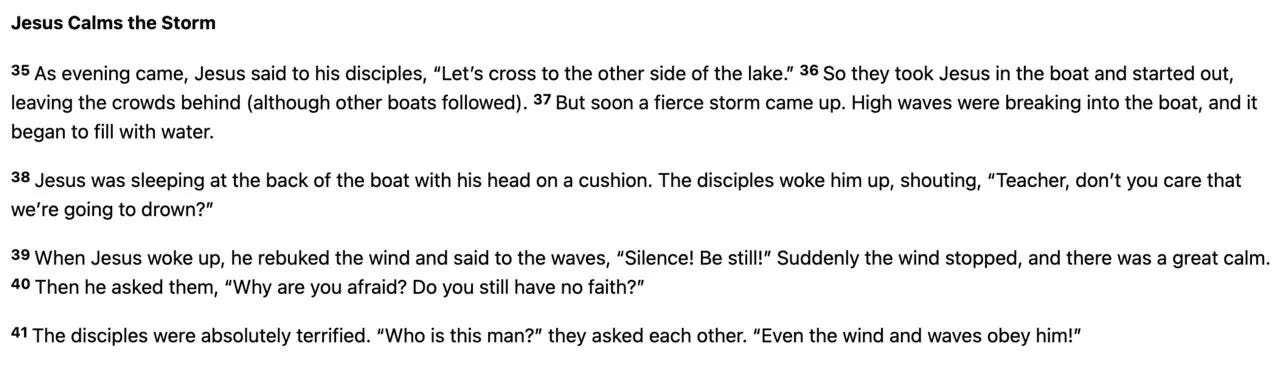
The storm is violent. The disciples panic. Water fills the boat. Experienced fishermen begin to fear death.
And Jesus sleeps.
The contrast is staggering.
The disciples measure the storm. Jesus measures the Father.
The disciples interpret the storm as evidence that they are doomed. Jesus interprets the Father’s presence as greater than the storm.
And this is important.
Peace existed in the boat before the storm stopped.
That changes everything.
Can we get to the place where the presence of Jesus in our boat means more to us than the violence of the storm around it?
Can we truly arrive at the conviction that if Christ is with us, then even chaos itself loses ultimate authority?
But… what about my anxiety?
I think this is where resurrection peace becomes deeply practical.
Because most of us are not standing before Roman courts or surviving shipwrecks.
But we are anxious. We are exhausted. We are pressured. We are comparing timelines. We are afraid of failure. We are carrying quiet fears about provision, purpose, marriage, family, health, and the future.
And the modern world has become extraordinarily efficient at producing restlessness.
There is always somebody ahead. Always another milestone. Always another race. Always another reminder that you are behind.
But resurrection peace disrupts the entire architecture of that anxiety.
Because if Christ truly conquered death — the maximum human threat — then every lesser threat loses ultimate authority.
This is why Paul can write:
“For to me, to live is Christ and to die is gain.” (Philippians 1:21)
Heads or tails, he wins.
And if you’ve accepted the promise of resurrection, then guess what?
HEADS OR TAILS… YOU WIN!
And that is not motivational language. That is resurrection “logic”.
Death itself has been defeated.
So what exactly remains unconquerable?
Paul understood this deeply.
Which is why he says in Philippians 4 that he has learned the secret of being content in every situation (Philippians 4:11–13).
Notice that word carefully.
Learned.
Peace, in the resurrection life, is not passive emotional temperament. It is formed through encounter, surrender, and trust.
Paul says:
“I know how to abase and I know how to abound.” (Philippians 4:12)
What an unbelievable sentence.
Modern life teaches us that peace lives in abundance. Paul says he discovered peace in both abundance and lack.
Why?
Because provision was no longer tied merely to visible resources.
“My God shall supply all your needs according to His riches in glory by Christ Jesus.” (Philippians 4:19)
This changes how a believer lives. Or at least, it should.
Personally, if I were ever asked to mention one thing that genuinely makes my life different as a believer, it would be this inexplicable peace.
Not perfection. Not constant happiness. Not a trouble-free life.
Peace.
A kind of deep internal steadiness.
Years ago, I realised that due to an administrative issue, my four-year undergraduate programme would likely take seven years to complete.
At the time, it felt devastating. Truly.
Watching life appear to move ahead for others while mine seemed suspended in delay produced grief I cannot fully describe.
And yet, somewhere inside that process, God taught me something.
With Him, there is no such thing as “too late.”
Over a decade later, I can now see doors He opened that I could never have engineered for myself. Opportunities that leapfrogged timelines. Grace that made nonsense of human sequencing.
And I think resurrection does this.
It breaks our obsession with timing. And boy, do we need this.
Because resurrection itself is proof that God can enter situations that appear completely finished and still bring life out of them… literally.
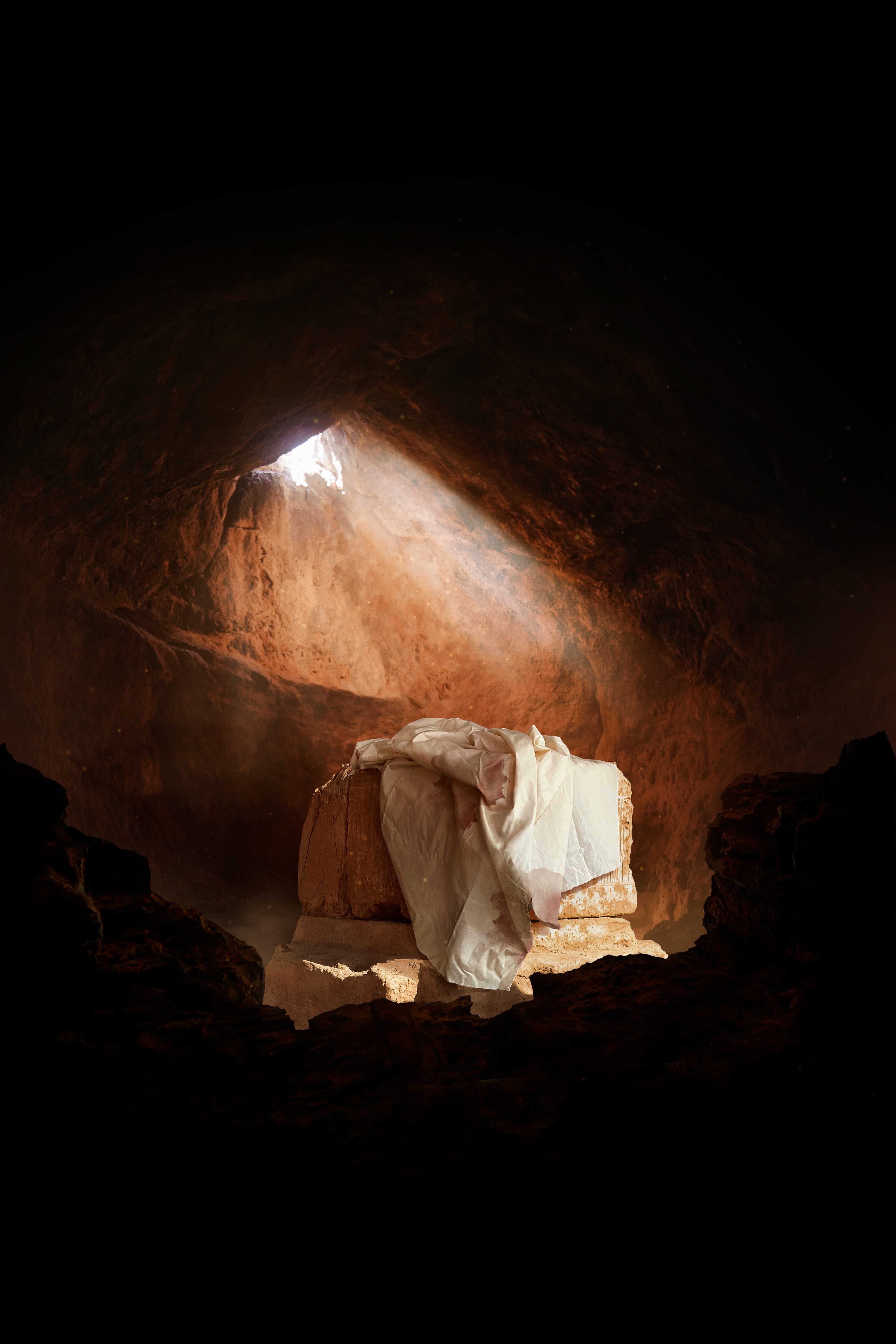
The empty tomb permanently altered what “impossible” means.
This is why Psalm 23 has become so powerful to me:
“The Lord is my shepherd; I shall not want.” (Psalm 23:1)
Not because I possess everything. But because I trust the Shepherd.
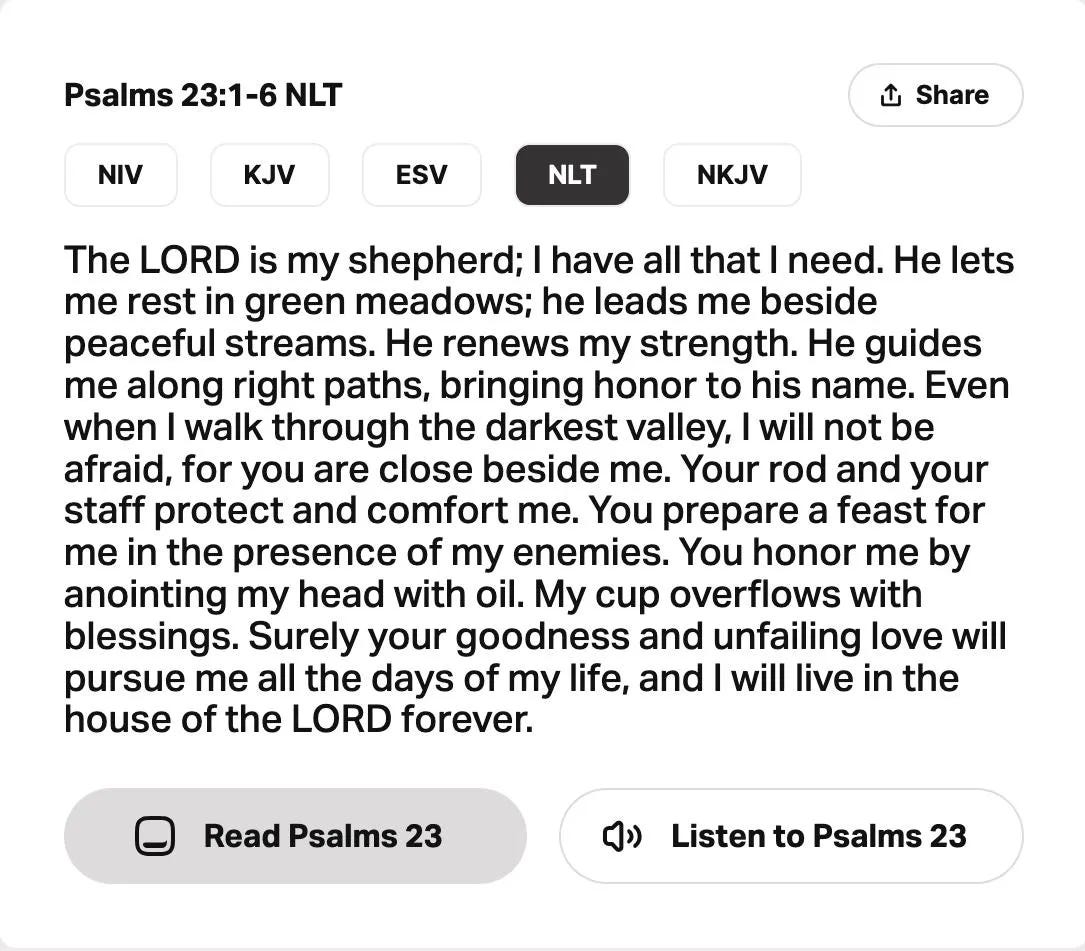
I find deep solace in believing that whatever I truly need, He knows. And whatever He withholds, He understands better than I do.
This peace is not passive.
That is important.
The pursuit of peace is not escapism. It is not disengagement from the world.
Christians are not called into resignation.
We are active participants in the reign of God.
Sometimes peace looks like prayer. Sometimes it looks like obedience. Sometimes it looks like building. Sometimes it looks like enduring. Sometimes it looks like shining light into dark places (Matthew 5:14–16).
Peace is not inactivity. It is trust-filled action.
Jehovah Shalom
…And this trust changes how one moves through the world.
My mother once told me about an experience she had after a church vigil.
She woke in the middle of the night feeling a strange weight pressing heavily against her body. Opening her eyes, she remembers seeing what looked like a terrifying demonic creature.
And her response was deeply amusing to me.
She looked at it and simply said or thought something in the lines of:
“Oh, you?”
Then went back to sleep.
That. Is. peace.
Not because fear is unreal. Not because darkness does not exist.
But because Christ has become greater.
The world does not understand that kind of peace. Because the world’s peace depends entirely on control.
But resurrection peace emerges from trust.
Trust that Christ truly is who He says He is. Trust that His promises hold. Trust that He remains present even in chaos. Trust that He is Jehovah Shalom.
This is why the lyrics from Hillsong’s song Peace move me so deeply:
“You will stay true Even in the chaos Your word remains truth Even when my mind wreaks havoc…”
That line is painfully honest.
Because sometimes the chaos is external. And sometimes it is internal.
Sometimes the storm is around us. Sometimes the storm is in us.
And yet Christ still says:
“My peace I give you.” (John 14:27)
There is another line in that song that I think captures the entire spirit of resurrection life:
“Peace is a promise You keep.”
Not peace as wishful thinking. Not peace as denial.
Promise.
And the resurrection is what gives credibility to that promise.
Because after a man walks out of His own grave, every other promise He made must suddenly be reconsidered.
Including peace.
I think about this often.
The resurrection was not merely an event in history. It redefined history.
The entire world now organises itself around the life, death, and resurrection of Jesus whether it acknowledges Him or not. (Think BC/AD)
An all-powerful God stepped down into human limitation (Philippians 2:6–8). Entered suffering. Accepted ridicule. Accepted betrayal. Accepted crucifixion.
And did it all for the possibility that humanity might have true life and peace in Him.
That is astonishing.
And perhaps this is why Paul changes so radically.
Because once you truly encounter the risen Christ, peace stops being theoretical.
It becomes residential.
Romans 8:11 says that the same Spirit that raised Jesus from the dead now dwells in the believer.
Dwells.
Not visits occasionally. Not appears temporarily.
Dwells.
The resurrection life of Christ now inhabits the believer.
Which means peace is no longer merely an external promise. It becomes an internal condition produced by the Spirit of God.
This explains Paul.
It explains why prison did not silence him. Why suffering did not break him. Why uncertainty did not hollow him out. Why he could sing while chained (Acts 16:25).
The resurrection had made him unafraid. And perhaps this is what the world is truly searching for.
Not distraction. Not money. Not applause. Not endless achievement.
Peace.
Real peace.
The kind that survives storms. The kind that survives delay. The kind that survives uncertainty. The kind that survives suffering. The kind that survives even death itself.
And only Christ offers that.
Because the Prince of Peace does not merely give peace. He is peace.
Outside Him, peace remains temporary. Fragile. Circumstantial.
But in Him, something deeper becomes possible.
A life anchored beyond visible conditions. A soul guarded by resurrection. A heart finally at rest.
And perhaps this is what Paul finally discovered on the Damascus road.
A blind man, finally seeing.
May our Lord Jesus Christ reveal Himself to us in this same way. May He calm the storms within us. May He teach our restless hearts to rest in Him. May He truly become to us Jehovah Shalom.
And may the peace He promised guard our hearts and minds in Christ Jesus (Philippians 4:7).
Amen.
Written by - Ebube Agu for Burning Bouche
Amen.