Post-Resurrection Notes (iii)
Freedom from Hopelessness

I know of a man who has lived for years with a chronic and degenerative condition. At first, he fought hard through treatments, diets, and experimental therapies, but nothing changed.
Medicine has told him there is nothing more that can be done and that he now just has to wait for the worst outcome.
He has prayed. Not casually, but desperately. He has cried out to God again and again. He has read scriptures about healing and about a God who restores.
Still, nothing changed.
Now he just feels empty, and he is tired. He has heard every version of hope before. To him, prayer feels like repeating words into silence. He has come to a place where he has accepted that whatever will happen will happen. He is not afraid of death anymore. He is simply waiting for it.
Recently, a friend of mine said to him, “Let’s pray about this issue.” He did not get angry. Instead, with a faint, almost wry smile, he warned my friend off, saying, “People have prayed.” It was his way of telling my friend not to waste his time. The grief and disappointment he has experienced from unanswered prayer have weighed him down, leading him to approach prayer with a guarded spirit.
Hopelessness has quietly settled in. It does not even look like resentment. It is just how he copes.
I want to be careful here, because the Bible does not treat his posture as shameful. Lament is not the same thing as faithlessness, and it is important to name that clearly before going any further. The Psalms are full of people who cried into the silence and heard nothing back. Job sat in his grief so long his friends ran out of arguments. Lamentations is an entire book of a man staring at ruins and not being rushed out of them. Scripture does not flinch at the long, quiet ache. God is not embarrassed by it, and neither should we be. There is a holy kind of waiting that looks, from the outside, like giving up, but is actually a form of trust that has been stripped of every performance. If the man I just described is in that place, I am not here to diagnose him or to offer him a quick fix dressed in spiritual language.
What I want to explore is something more specific. It is what happens when lament tips over into a settled conclusion that nothing will ever change again, not as a feeling that comes and goes, but as a permanent address. That is a different thing. That is hopelessness. And hopelessness, unlike lament, has stopped asking God any questions entirely. It has filed the case and closed it.
That closed-case feeling reminds me a lot of the encounter that Cleopas and the other unnamed disciple had with Jesus on their way to Emmaus.
The first time I read that account in Luke 24, I remember vividly what it did to me. It was so striking and so powerful, and it burned in my heart.
It follows the story of two disciples who walk away from Jerusalem after witnessing the death of Jesus, their conversation heavy with the memory of a brutal execution and the events that had shaken the city only hours before. You can feel the weight in their words. They are confused, tired, and heavily shaken. A stranger joins them, and they begin to tell the story out loud, trying to make sense of what has just happened, even wrestling with reports that some women claim to have seen Jesus alive after being crucified. Yet they had watched him broken, bleeding, and laid down lifeless. That kind of rumour, when grief is that fresh and that physical, is what makes one decide to pack it up and move. Everyone is finding ways to deal with what they witnessed. Some claim to see him alive. For others, it is time to start life somewhere new.
Let’s look at a particular verse in that passage that I find very striking:
Luke 24:21, “but we had hoped that he was the one who was going to redeem Israel. And what is more, it is the third day since all this took place.”
There are three words in that verse that are very sad. Not loud, not dramatic, just quietly devastating:
we had hoped.
Hope that has gone quiet. More of us live there than we ever say out loud. We have simply learned to embrace disappointment and carry little or no expectation that things will be different, faithful on the outside but no longer expecting anything on the inside, just living the day as it comes.
Hopelessness is a thing. A powerful thing.
It is worth pausing to notice what kind of hope these two disciples had lost. They are not only speaking about personal spiritual disappointment. These were people who had dared to believe that Jesus was the answer not just to their private anguish but to the public suffering of an entire people. For a first-century Jewish person living under Roman occupation, the word redemption carried enormous political weight, a longing for real liberation from an empire that controlled their land, their money, and their temple. And now he was dead. The political dream and the personal faith had collapsed together in a single afternoon.
As a young Nigerian who grew up in Nigeria, the 20th of October 2020 helps me, in a small but profound way, understand the emotions of those disciples walking away from Jerusalem.
Here is the context.
The #EndSARS movement in Nigeria began as a massive uprising. What started as a call to end police brutality quickly swelled into something far greater, an urgent, roaring demand to end bad governance altogether. Young people across Nigeria united in what felt almost miraculous. Their voices merged into one, and together they staged one of the most organised protests the nation had ever seen.
They slept under the toll gate. They blocked car access. They built systems. Emergency services were provided, food was made available, and order emerged from what many expected to be chaos. Their voices grew louder, echoing beyond Nigeria and capturing the attention of the world.
At first, the government seemed at ease. They attempted negotiation. They asked, “Who are your leaders so we can resolve this?” But the young people responded in one unified voice: we have no leaders. Instead, they presented five clear demands. They wanted change, and they wanted it now.
The fire grew, wild yet strangely contained. It burned, but it did not destroy. It felt like a refining fire, fierce and determined. For once in my lifetime, there was a rising swell of hope and celebration, and a better future seemed within reach.
Then came the turning point.
October 20th, 2020.
The government had had enough and felt very threatened by the scale of the protest, so it issued a fierce warning for everyone involved to disperse or face serious consequences. The young people responded with courage. They stood their ground.
And then the unthinkable happened.
Sometime around 8 p.m. that day, the streetlights at the protest site were turned off. Shortly after, security forces opened fire at the Lekki toll gate on unarmed young Nigerians who were sitting on the ground, waving Nigerian flags, and singing the national anthem.
It was devastating. I, for one, watched the events unfold live on Instagram, as some brave individuals streamed the shootings and killings as they were happening, showing open wounds and chaos in real time. And even in that darkness there was hope, that this evidence would spark intervention, that the deaths of these young Nigerians would give birth to a new day.
But instead, what followed was even far more devastating.
The speech from the then Nigerian President after the event carried no acknowledgment of the dead, no recognition of the pain, and no compassion. It instead carried a stern warning that there would be further consequences if people did not desist.
Then silence.
It felt like a national depression.
The strength to keep fighting drained away.
The hope for a new Nigeria seemed to vanish overnight.
What followed was a mass departure.
Young Nigerians, their hopes shattered, began to leave in waves, to Canada, the UK, Cyprus, Australia, anywhere but home. People sold everything they had, borrowed beyond their means, gathered whatever they could, just to escape. This wave became widely known as Japa.
And what was the true engine behind it?
A loss of hope.
Migration has always existed, but what tips it from a trickle to a wave, what turns enduring into leaving, is usually not danger or poverty alone. It is the death of the belief that things can ever be different here. The Japa surge at that scale was powered by a lost future.
Hopelessness, like hope, is not passive. It generates movement, and that movement has a direction, away from the site of promised transformation. In the story in Luke 24, many others were travelling along the road to Emmaus that day, some hopeful to meet their loved ones at the end of their journey, but for these two disciples, it was hopelessness that was powering their feet. And the man I described at the beginning of this piece is on a version of that same road, travelling deeper into the distance. And for many of us, this is very relatable. The decisions we are forming and the resolve we are building are powered by dashed expectations, disappointments and failed attempts.
This is why I consider it to be very significant that in the sequence of His post-resurrection appearances, Jesus prioritised meeting these particular disciples — He bypassed the inner circle and appeared first (after Mary Magdalene) to people who were without hope and leaving. This sequence is not merely incidental; it reveals to me God’s diagnostic priority. Hopelessness sits high on the divine agenda.
Whether this was His second or His third appearance in the sequence (as debated by gospel scholars), what is undeniable is that before He appeared to the gathered apostles in any sustained and personal way, He chose to walk alongside people who had already concluded it was over. Not the inner circle, not the people who had been physically closest to Jesus throughout His ministry, but peripheral disciples who were not even among the eleven. Cleopas and his unnamed companion, disciples who had already started the journey somewhere else, received Jesus.
Jesus did not send a message. He came by himself. He walked at their pace. He let them speak first. He heard their disappointment without interrupting it. And then He opened the story wider than their grief had allowed them to see, showing them how the prophets had always been pointing to exactly this, and then opening their eyes to see Him, resurrected, present, standing inside their own story.
The Bible says that with great excitement they turned right back around, even though it had gotten really late.
Hopelessness powered their feet away from Jerusalem. Living hope powered them back.
What does this mean for us? Many of us are dealing with disappointment that has quietly hardened into hopelessness, showing up in different ways.
There might be someone reading this who has come to accept living with a chronic condition as just the way things are, who has prayed and prayed and now, when offered prayer, smiles politely and says nothing because it feels like wishful thinking.
Jesus wants to show you His resurrection power.
There might be someone who has prayed faithfully for a brother, sister, friend, or spouse, but they look set in their ways, divisive, refusing to do better, and now you have given up on them. Now you just want to delete every memory of them. Jesus wants to show you His resurrection power.
And for a person like me, a young man who grew up believing in his country, its ideals, its future, but over time has watched corruption, division, injustice, and decline, and for whom every election feels like choosing between bad options and every news cycle confirms the cynicism, I need to go back to the resurrection story of Jesus and see the resurrection power. It needs to burn in my heart.
And what is the resurrection power? I mean really, do we know the resurrection of our Lord Jesus? Do we really know it?
The worst outcome of any situation, as we understand it, is death. After sickness has led to death, where further can it go? After corrupt leadership has produced death, where further can it go? After grief and suffering have produced death, where further can it go? After death itself has produced death, where further can it go?
And hopelessness is possible because death is possible, because if there wasn’t a fatal outcome, there would always be the possibility of something better.
However, living hope is possible because death ends at death, and resurrection goes beyond it and destroys it. So however far impossibility, difficulty, or sickness may travel, even all the way to death, resurrection travels farther, beyond death, and conquers it.
And because resurrection power is a force so categorically superior to death, it therefore renders every lesser threat within the chain leading to death already overcome.
Now here is something we need to sit with.
The Apostle Paul writes in Romans 8:11, “If the Spirit of Him who raised Jesus from the dead dwells in you, He who raised Christ from the dead will also give life to your mortal bodies through His Spirit who dwells in you.”
He does not say the Spirit will arrive one day when things reach their worst point. He says the Spirit already dwells in you. Right now. The same power that carried Jesus out of the grave is not waiting somewhere at the end of your story. It is residential. It lives inside you at this moment, at whatever point in the difficulty you are currently standing.
The logical structure is then this: Resurrection Power overcomes the maximum (death), then Resurrection Power is by definition greater than every sub-maximum. The power available to you at the point where death threatens is the same power available to you at the point of job loss, sickness, or relationship breakdown. The same voltage that powers a city does not reduce itself to power a lightbulb.
And Paul goes further in Romans 8:37–39. He lists everything in the chain of suffering, tribulation, distress, persecution, famine, danger, death itself, and then does not say we overcome them one by one at the final stage. He says we are more than conquerors through all of it, simultaneously, through Him who loved us.
This is very important.
The power that splits death open from the inside, when it arrives at your situation, it arrives in full, with complete capacity, at whatever point you are.
Oh! Our hearts need to burn again. Living Hope needs to burn within us.
Your health situation, your financial pressure, your broken relationship, these are real and they are heavy. But you are facing them with the same Spirit that raised Jesus Christ from the dead. This means you do not wait for your situation to reach its most catastrophic form before turning to resurrection hope. You bring it to bear at the point of the earliest threat.
As the German theologian Jurgen Moltmann writes, “hope finds in Christ not only consolation in suffering, but also the protest of the divine promise against suffering.” I find this profoundly compelling. We are called to operationalise that protest and embody it in lived reality. Resurrection life is not merely consolation offered after the chain of suffering has run its course, but a disruptive inbreaking that interrupts suffering at any point along it, and says it does not get the final word.
The same power that says to death, “Where is your sting?” will vanquish sickness with little effort.
Now there is one more thing worth mentioning here, because resurrection power is not a single note; it is a full symphony. While there is suffering that is weaponised toward death, where the enemy uses sickness, loss, or breakdown as a chain intended to terminate and obliterate, there is also suffering that God himself has permitted as a vehicle for revealing His glory, where death or the threat of it is not the enemy’s weapon but God’s stage. Jesus himself drew this distinction when Lazarus fell ill. He said in John 11:4, “This sickness is not unto death, but for the glory of God.” He was not saying Lazarus would not die. Lazarus did die. What Jesus was saying is that death was not the destination of that suffering. God had permitted it for a different purpose entirely, to stage the most vivid foreshadowing of His own resurrection that the world had ever seen. Lazarus in the tomb was God drawing a picture. So there is suffering that the enemy intends to destroy you, and resurrection power dismantles that chain at every link. And there is suffering that God has written into your story as a stage, where what looks like the end is actually the setup. In both cases, resurrection has the final word. In the first, it interrupts. In the second, it reveals.
So, to put it simply, that experience of pain, hurt, lack of clarity, or suffering, where its ongoing progression and persistent presence seems to threaten death to a believer, is wasting its time.
This is why Paul says in Ephesians 3:20 that God is able to do “exceedingly abundantly above all that we ask or think, according to the power that works in us.”
And so we come back to ourselves. To our disappointment. To our hopelessness. To the overpowering belief that our husband, wife, sibling, friend, relationship is a lost cause. To illness and conditions that wear the body down and have produced despair. To our sealed lips that now consider prayer may only be wishful thinking.
To Cleopas and the unnamed disciple.
To those three haunting words: we had hoped.
Jesus is not asking us to pretend the disappointment was not real or that the prayers did not feel like talking to a wall or that we manufacture fake optimism. He walked alongside two people who had already concluded it was over, and He did not begin by correcting them. He began by walking with them. He began by listening. And when they had said everything they needed to say, He opened the story wider than their grief had allowed them to see.
It is my prayer that Jesus will open our eyes and show us the resurrection power in its full glory. To ignite our fire. Keep our hearts burning. And to see that death, the maximum of pain and suffering, is already destroyed, so too is every lesser maximum overcome.
Because the road to Emmaus does not end in Emmaus.
It turns back toward Jerusalem.
And it is Living Hope that turns it.
And may our Lord Jesus Christ fill us with this living hope.
Amen.
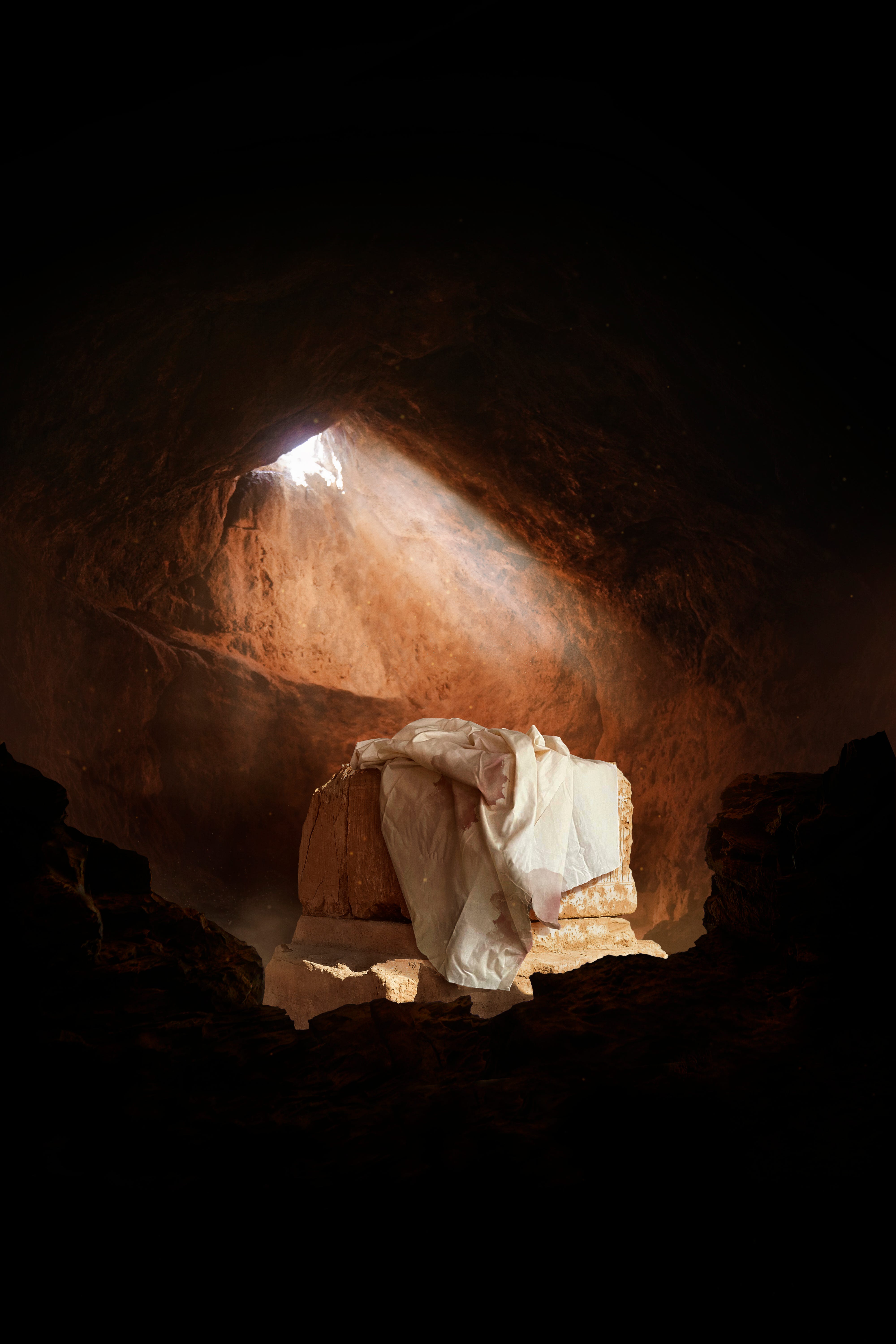
“that I may know him, and the power of his resurrection…
Thank you for this